Mims, the orange groves, and the slow recovery after 1895
Mims sits five miles north of Titusville, on the climate edge for commercial citrus. The 1894–95 freeze nearly ended the local industry; what came back was smaller and more diversified.
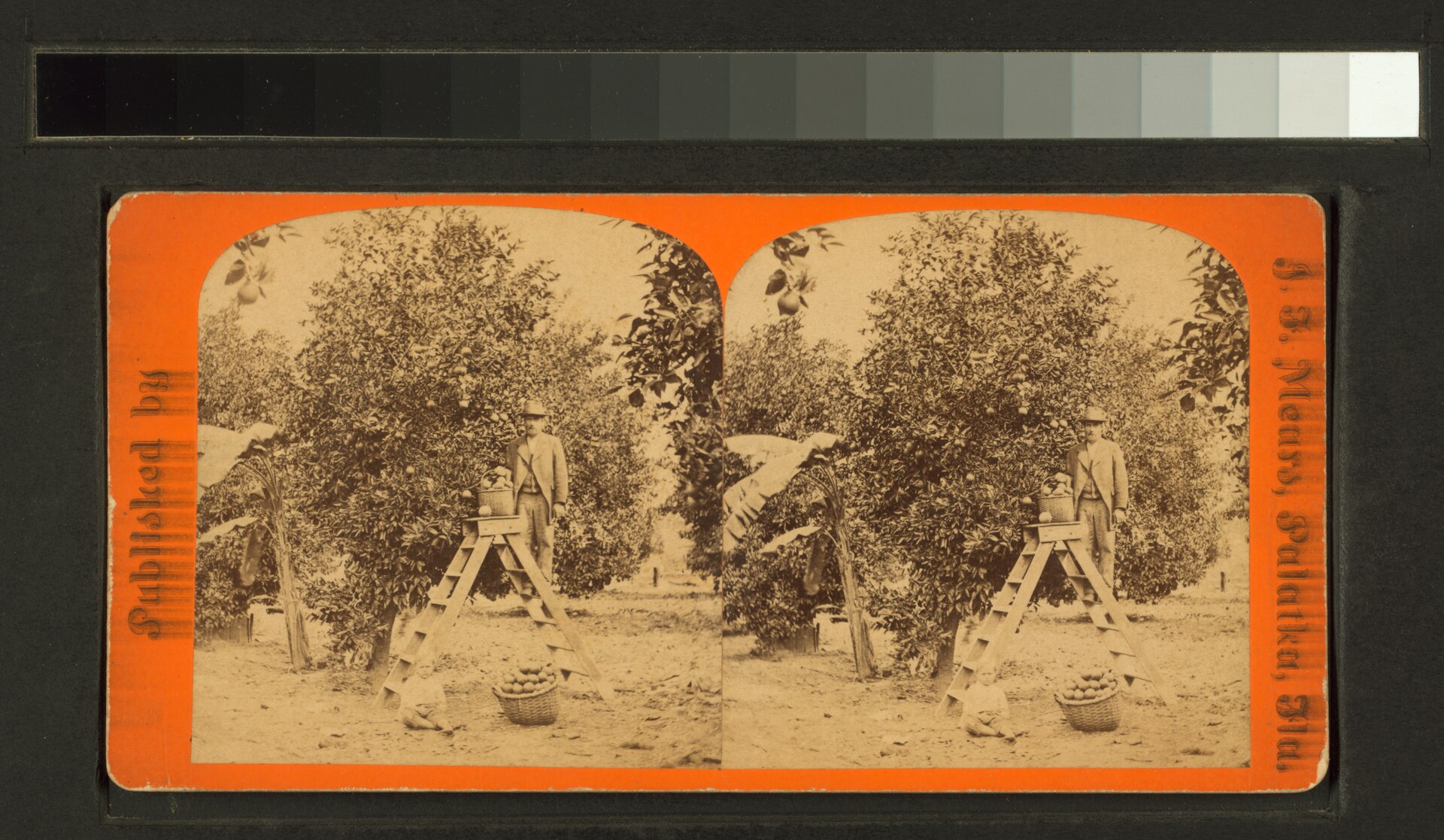
Mims sits about five miles north of downtown Titusville, on State Road 46 west of US-1, in unincorporated Brevard County. It’s the northernmost commercial citrus community in Brevard, on the cold-edge of the climate zone where oranges and grapefruits will reliably overwinter. Through the 1880s it had been a productive grove area; the 1894–95 freeze nearly ended it; what came back through the 1920s and onward was smaller, more diversified, and structurally different.
The Mims of 2026 is mostly residential, with some surviving family-run citrus operations, several large fern-and-tropical-nursery businesses, and the Harry T. and Harriette V. Moore Memorial Park. Its population in the 2020 census was 6,994.
The pre-freeze grove economy
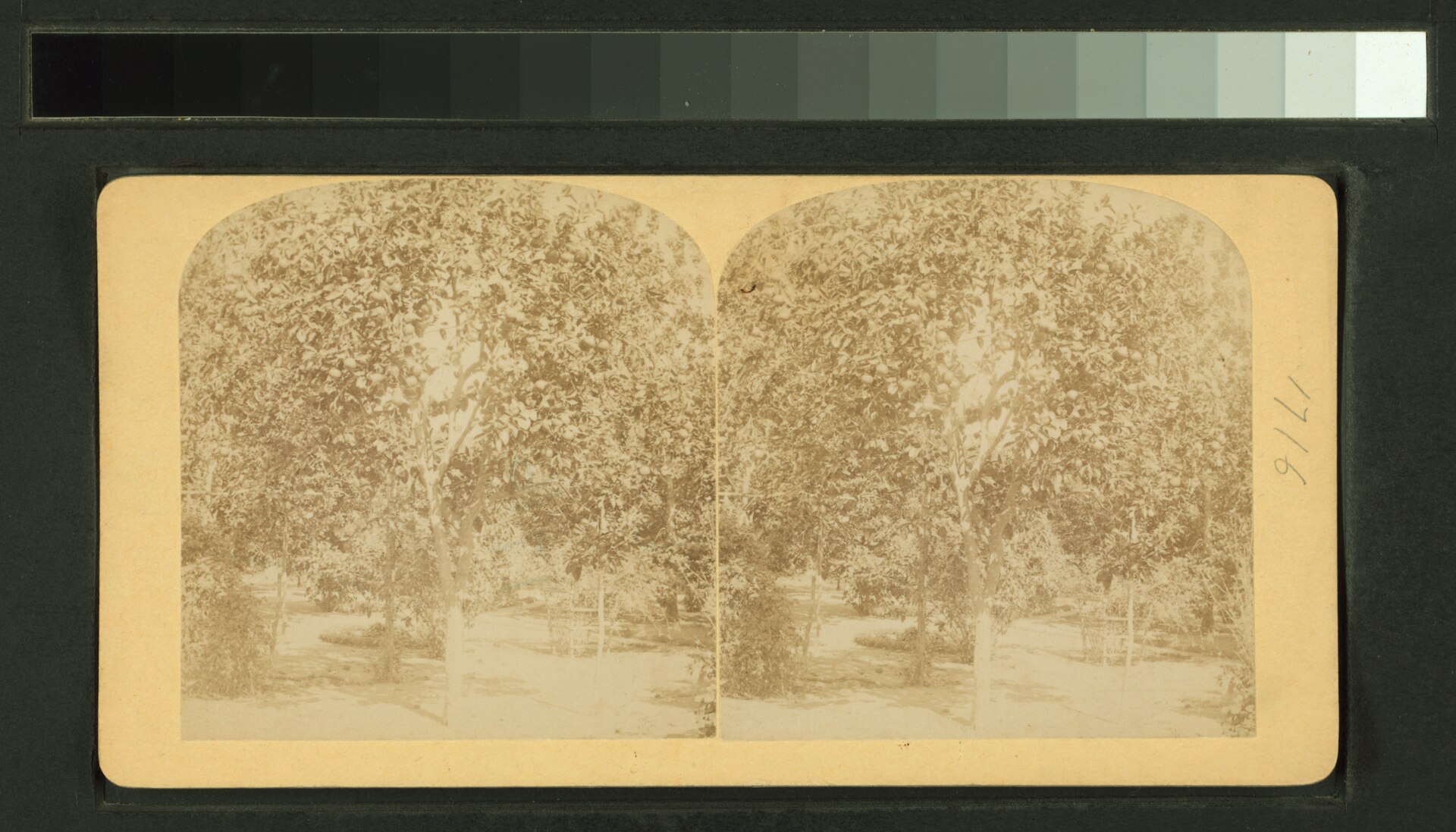
By 1894 Mims had perhaps two dozen commercial grove operations of various scales, ranging from family plots of five to twenty acres up to a handful of consolidated operations approaching a few hundred acres. Most were sweet-orange standards on lemon or sour-orange rootstock, planted on the sandy ridge running parallel to US-1 a mile or two inland from the Indian River bluff.
The 1890 census recorded Mims as a small but sustained farming community. Grove labor was Black, drawn from families who had been in the area since the 1850s and 1860s and from newer arrivals through the post-Civil War migration north out of central Florida. Wages were low; the work was seasonal; the housing arrangements (small frame houses on grove operators’ property, sometimes rent-deducted from wages) were typical of the period.
What the freeze did to Mims specifically
Mims’s grove inventory was more or less wiped out in February 1895. Surviving correspondence in the Brevard County records (where it survives the 1894 courthouse fire) and oral-history accounts collected in mid-20th-century WPA interviews describe most of the grove acreage at Mims being dead within months. The unusually warm late-January 1895 weather had pushed Mims trees into new growth that the February freeze then killed.
Some grove operators replanted immediately. Most did not. The economics didn’t support it: the FEC railroad had extended south past Titusville by 1894–95, reducing the transshipment premium at the Titusville depot; rebuilding a grove from rootstock takes seven to ten years to first commercial production; capital was scarce; the climate risk had been demonstrated emphatically.
By 1900 the Mims population was lower than it had been in 1890. Several grove operators relocated to warmer counties further south. Some shifted to vegetable truck farming on their existing land, cabbage, tomatoes, beans for the Northern winter market, which had a shorter capital horizon and better tolerance for occasional cold events.
The slow rebuild, 1900s–1920s
Through the early 20th century Mims rebuilt its citrus base slowly. Several factors made the rebuild possible at all:
- Cold-tolerant rootstocks. The shift from lemon rootstock to sour orange (and later, in the 1930s and 1940s, to trifoliate orange hybrids) gave Mims groves a margin against the lower-temperature events that had ended the 1894–95 operation.
- Smaller average grove size. The post-freeze rebuild was dominated by family-scale operations of 20–80 acres, not the larger pre-freeze commercial concerns. Smaller operations could be self-financed, didn’t require external investment, and could be diversified across crops to spread risk.
- Better marketing infrastructure. The Indian River Citrus League formed in 1930 as a regional marketing cooperative; it gave smaller grove operators access to grading, packing, and shipping that a single small grove couldn’t sustain.
By the 1920s Mims had recovered to a level of citrus production that was significant but not at 1894 scale. By the 1940s it was producing the bulk of the citrus that left Brevard County by rail.
The 1962 freeze and the long decline
A severe freeze in December 1962 hit Mims hard again. Many of the trees that had been productive since the 1920s and 1930s rebuild were killed. The replanting wave that followed used the modern rootstock-and-spacing patterns that dominate Florida citrus through the late 20th century.
The longer-term threat, however, has been not freezes but disease. Citrus canker outbreaks in the 1980s and 1990s required eradication programs that destroyed many Mims groves on a precautionary basis. The arrival of citrus greening disease (HLB, Candidatus Liberibacter asiaticus) in Florida in 2005 began a wave of grove abandonment that’s still working through the state. UF/IFAS estimates Florida’s commercial citrus acreage has declined by more than 75% from its mid-1990s peak.
Mims has felt this acutely. The grove operations that survived the freezes have, in many cases, not survived greening. The land has been sold to residential developers, converted to ornamental-plant nurseries, or simply taken out of production.
What Mims looks like now
Driving through Mims in 2026, the historical layers are visible. The Old Dixie Highway corridor, where the Moore home stood and where La Grange Cemetery sits, has surviving wood-frame houses from the 1900s–1920s rebuild era. Several active citrus groves remain, smaller than they once were. The Harry T. and Harriette V. Moore Memorial Park (opened in stages 2004–2007) preserves the most historically significant site.
The community’s Black population, which built much of the grove labor force from the 1880s onward and from which Harry T. Moore came, persists. Mims’s demographic profile in the 2020 census shows a substantial Black population (roughly 25–30%) alongside a white majority. Several churches with congregational histories dating to the 1900s and 1910s anchor the community socially.
Harry T. Moore and the labor force
The most consequential single resident the Mims grove community ever produced was Harry Tyson Moore, born November 18, 1905 in Houston, Florida (a small community in Suwannee County), who relocated to Brevard County in the late 1920s after his mother’s death and married Harriette Vyda Simms in 1926. Both Moores taught in Brevard County’s segregated Black schools, including the Titusville Colored School. Per Moore’s published biographical record, he founded the Brevard County NAACP chapter in 1934 and rose to become state secretary for Florida’s NAACP in the early 1930s.
Moore’s work targeted the structural inequities the grove labor system had built and depended on: voter suppression, unequal teacher pay between white and Black schools, the white primary that excluded Black voters from meaningful electoral participation, and the unprosecuted lynchings that enforced the racial hierarchy across central Florida. Following the U.S. Supreme Court’s 1944 ruling against the white primary, Moore’s Progressive Voters League drove Black voter registration in Florida to roughly 31 percent of those eligible, an extraordinary figure for the deep-South Jim Crow era.
The Moores were fired from their teaching positions in 1946 for civil-rights activism. Harry accepted a paid NAACP position to support the family. On Christmas night 1951, the Moores’ twenty-fifth wedding anniversary, a bomb planted beneath their Mims home killed Harry; Harriette died nine days later in the hospital. The 2005 to 2006 reinvestigation by the Florida Attorney General’s office identified four deceased Ku Klux Klan members as the likely perpetrators. The Moores were the first NAACP officials assassinated for civil-rights work; the Spingarn Medal was awarded to Harry posthumously in 1952. The Moores are buried at La Grange Cemetery in Titusville. The Harry T. and Harriette V. Moore Memorial Park in Mims preserves the bombing site.
The honest position on Mims’s economy
Citrus is a much smaller part of Mims’s economy in 2026 than it was in 1894 or 1924. The greening disease is the proximate driver; the longer-term issue is that small-acreage citrus operation in Florida is not competitive with the consolidated operations in Polk County and points south, and labor costs and water-management costs have squeezed family grove operations on the lagoon-side ridge for decades.
What’s left is the land base, the families who have stayed, the cemetery, the memorial site, and the slow conversion to suburban residential use as Brevard’s population pushes north from Titusville. The grove era of Mims is not over but it’s substantially behind it.
Further Reading
As an Amazon Associate we earn from qualifying purchases.