Harry T. and Harriette Moore: the Christmas-night bombing in Mims, 1951
On December 25, 1951, a bomb planted under the bedroom of NAACP organizer Harry T. Moore killed him and, nine days later, his wife Harriette. The case was never prosecuted in their lifetimes. The FBI named four KKK members in 2006.
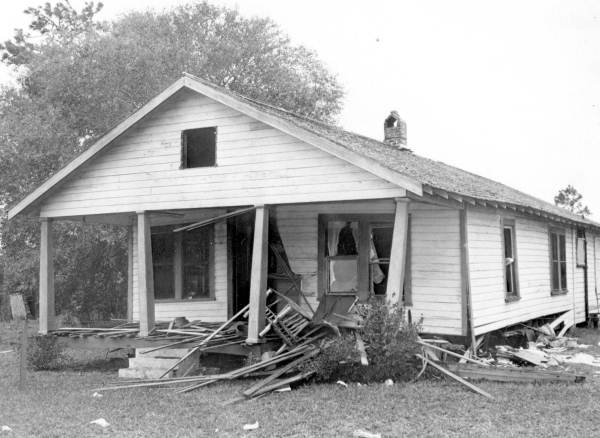
On the night of December 25, 1951, a bomb planted under the bedroom of Harry T. Moore’s home in Mims, Florida, detonated and killed him. His wife Harriette, injured in the same blast, died nine days later in a Sanford hospital. Moore was the executive director of the Florida State Conference of the NAACP. The bombing made him the first NAACP official assassinated in the modern civil rights era. The case was never prosecuted in either Moore’s lifetime or his children’s. In August 2006 the Florida Attorney General’s office, after a multi-year reinvestigation, named four members of a Central Florida Ku Klux Klan klavern as the perpetrators, all of them deceased by that point.
The Moore case is the single most-cited Brevard County historical event in national civil rights scholarship. It happened in Mims, an unincorporated community immediately north of Titusville, and the Moores are buried at La Grange Cemetery on the Mims–Titusville boundary.
Who Harry T. Moore was
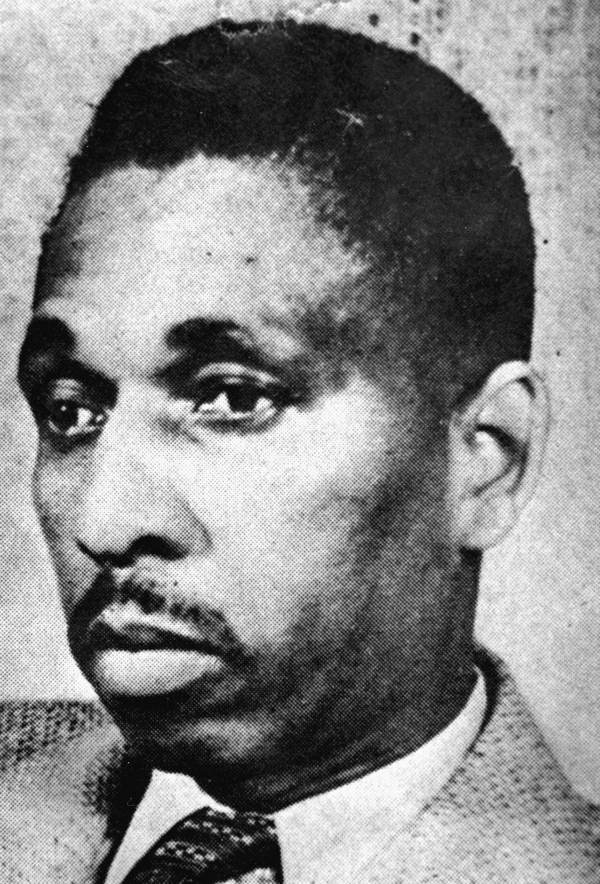
Harry Tyson Moore was born November 18, 1905, in Houston, Florida (a small Suwannee County community), grew up in Mims, and trained as a schoolteacher at Bethune-Cookman College in Daytona Beach. He returned to Brevard County after college and taught in the segregated Black school in Mims and then at Titusville’s Black school. In 1934 he co-founded the Brevard County NAACP, the first NAACP branch in the county.
By 1944 Moore was the head of the Florida State Conference of the NAACP. His organizing through the 1940s focused on three things: investigating lynchings and racially-motivated killings across the state (he documented multiple cases that the local sheriffs had declared accidents or suicides); voter registration in Black communities (the Florida Conference’s registration drive added tens of thousands of Black voters to the rolls between 1944 and 1950); and equal pay for Black teachers (Moore was the lead plaintiff in Moore v. Brevard County, a 1939 lawsuit that helped force pay equalization in Florida public schools).
In 1946 he was fired from his teaching job in Brevard County, in part because of his NAACP organizing. Through 1947–1951 he worked full-time as the Florida Conference director, paid through NAACP and donor support. He and Harriette continued to live in their family home in Mims.
The Groveland Four case
Moore’s most consequential investigation in 1949–51 was the Groveland Four case. Four Black men in Lake County, Florida had been accused of raping a white woman in July 1949. Three were arrested; a fourth was killed by a posse before he could be taken into custody. The trial that followed was widely understood at the time to be a sham; convictions were overturned by the U.S. Supreme Court in 1951.
In November 1951, while two of the defendants were being transported back to Lake County for retrial, Sheriff Willis V. McCall shot both of them on a roadside, killing one and wounding the other. McCall claimed they had attacked him. The surviving defendant, Walter Irvin, gave a sworn statement contradicting McCall’s account from his hospital bed.
Moore publicly called for McCall’s removal. He wrote to Governor Fuller Warren demanding action. Six weeks later he was dead.
The bombing
The Moore home was a small wood-frame house on what’s now NW Old Dixie Highway in Mims. The bomb was a dynamite charge placed under the floorboards directly beneath the master bedroom on the home’s east side. It detonated late on Christmas night 1951, several hours after the family had gone to bed. Harry was killed essentially instantly by the blast; Harriette was severely injured and transported to the Sanford hospital, where she died on January 3, 1952.
The blast obliterated the section of the house directly above the charge. Their daughters, Annie Rosalea (“Peaches”) and Juanita Evangeline, were in the home and survived. Both daughters lived for decades afterward and were significant later sources for journalism and scholarship on the case.
The investigations
The FBI opened an investigation in early 1952 under the Civil Rights Section of the Department of Justice. The agents working the case identified members of a Central Florida KKK klavern based in Apopka as the principal suspects within months of the bombing. Several were interviewed; some were polygraphed. Witness intimidation, the death of key witnesses through the 1950s, and the political climate of the period combined to prevent indictment.
The FBI closed the case in 1955 without prosecution. The original FBI investigation files are now available through the FBI Vault (the Bureau’s FOIA reading room) and are the primary documentary source for the case.
A 1978 state investigation under Florida Governor Reubin Askew reopened the file and reached similar conclusions to the original FBI work, but again declined to prosecute, primarily because most key suspects were dead.
The 2004–2006 reinvestigation under Florida Attorney General Charlie Crist produced the most complete published account. The August 2006 final report named Joseph Neville Cox, Earl J. Brooklyn, Tillman H. Belvin, and Edward L. Spivey as the principal perpetrators, all members of the Apopka klavern, all deceased by 2006. The report concluded that the case had been solvable in the early 1950s and that local and federal investigators had had enough evidence to prosecute had political will existed.
The Moores’ burial and the memorial site
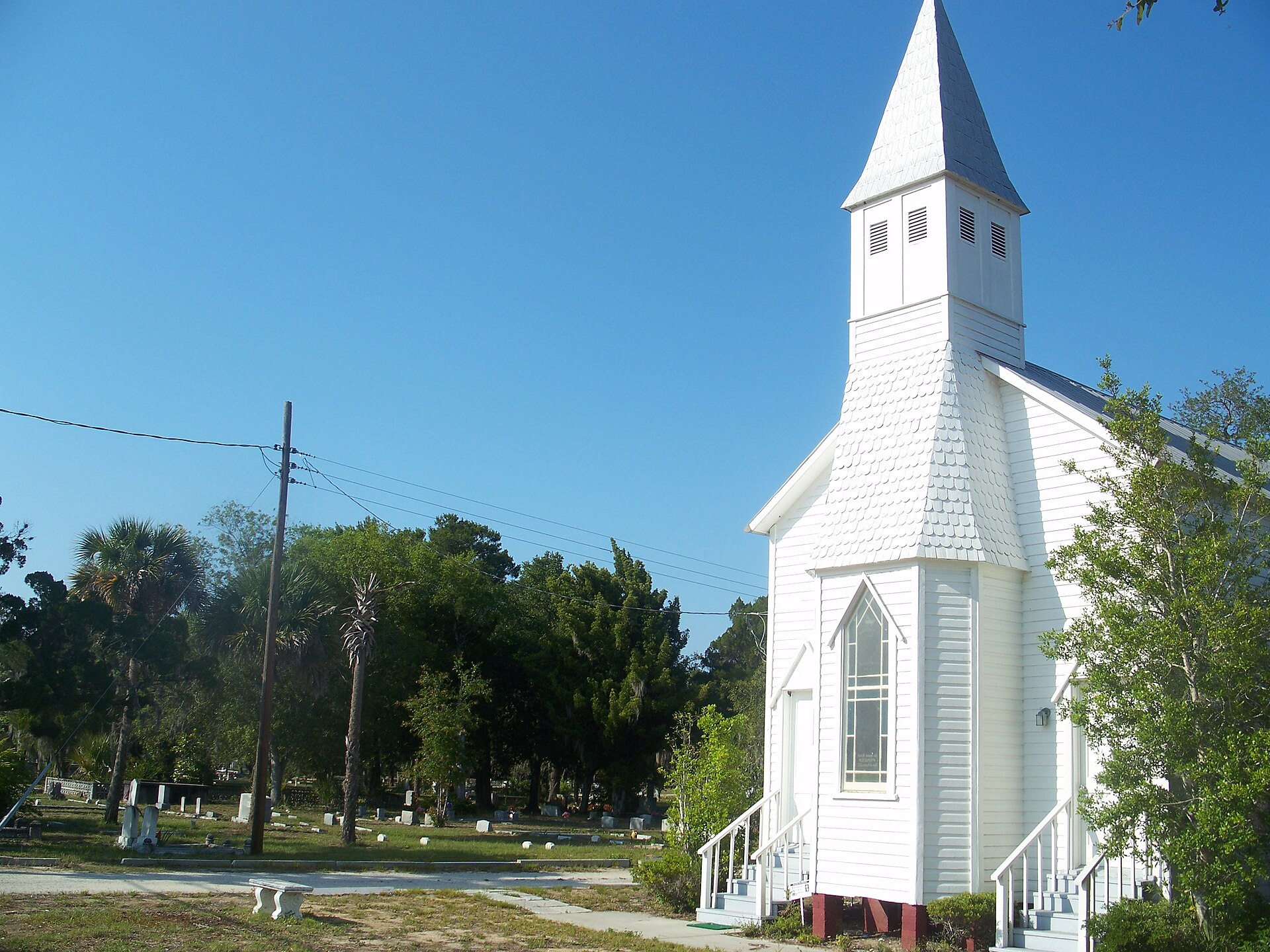
Harry and Harriette Moore are buried at La Grange Cemetery on the Titusville–Mims line. The cemetery dates to the 1850s and is the principal burying ground for both Black and white pioneers of north Brevard County.
The Moore home site in Mims is preserved as the Harry T. and Harriette V. Moore Memorial Park and Cultural Complex, opened in stages from 2004 through 2007 and operated by Brevard County. The complex includes a replica of the home (the original was demolished in the 1970s), a museum with original family documents on loan from the Moore daughters, and a memorial garden. The site is open to the public.
What the Moores’ deaths meant
The 1951 bombing came years before the Montgomery Bus Boycott, before Brown v. Board of Education, before any of the events that mark the conventional start of the civil rights era. Moore’s NAACP organizing in the 1940s, the voter-registration drives in particular, was a direct precursor to the legal and political infrastructure that the Southern Christian Leadership Conference, SNCC, and CORE would build in the late 1950s and 1960s. Florida had the largest Black voter registration of any Southern state in 1950 in part because of Moore’s work.
His death was meant to stop that work. It didn’t. The Florida State Conference of the NAACP continued under successor leadership; the voter rolls Moore had built kept growing; the schools he had won pay equalization for continued to operate. But it took five and a half decades from his murder until the State of Florida formally named the men who killed him.
The Moores’ children, particularly Juanita Evangeline Moore, who lived until 2015, spent the rest of their lives keeping the case in front of the public. The 2006 attorney general’s report dedicated the work in part to them.
A note on framing
This entry handles the case factually, with sources. The Moore murders are sometimes framed in current writing in language that imports later movement vocabulary anachronistically; we have tried to keep this account close to what’s documented at the time and to what the FBI, the State of Florida, and the primary scholarly biographies (Green 1999) actually establish. Where the surviving record is incomplete (the exact assembly and placement of the bomb, the precise communications among the named perpetrators in the weeks before December 25), we have not invented detail.
The Moores were killed for organizing voter registration and demanding accountability in police shootings of Black defendants. That is what’s in the FBI files. That is what’s in the state’s final report. The case is a primary-source-rich one. Read the sources.
Further Reading
As an Amazon Associate we earn from qualifying purchases.