The Enchanted Forest Sanctuary: north Brevard's surviving hardwood hammock
Brevard County's Enchanted Forest Sanctuary preserves nearly 470 acres of the eastern hardwood hammocks that once covered most of the Indian River ridge. The county acquired it in 1991.
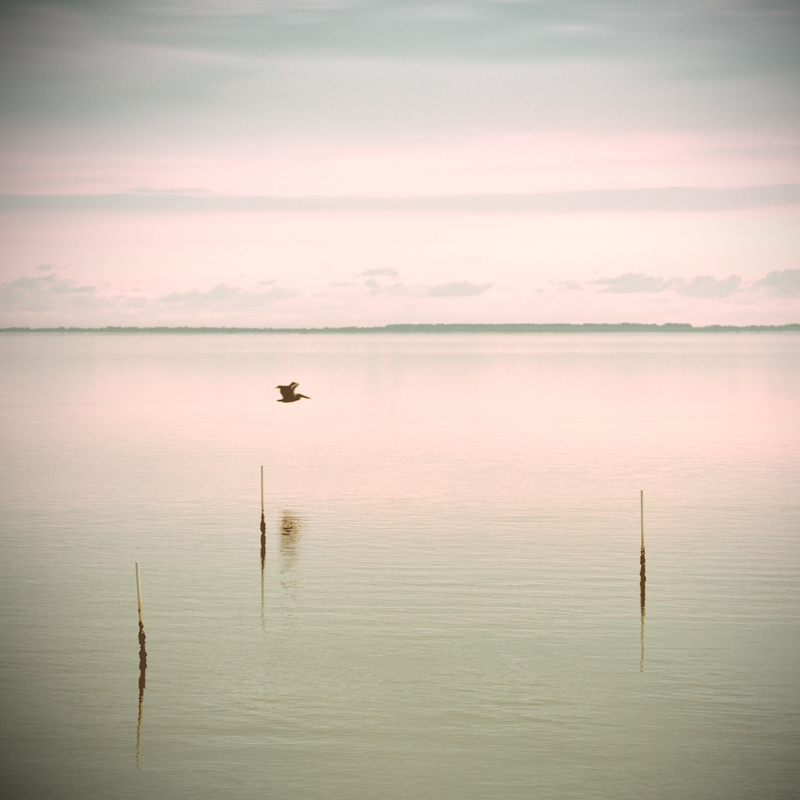
The Enchanted Forest Sanctuary covers approximately 470 acres of preserved hardwood hammock on the west side of US-1 north of Titusville, in unincorporated Brevard County. It’s the largest remaining example of the eastern hardwood-hammock ecosystem that once dominated the Atlantic-side ridge from Mims south through the Sebastian River basin. Brevard County acquired the site in 1991 under the Environmentally Endangered Lands (EEL) Program, a voter-approved land-acquisition initiative passed in 1990.
The sanctuary preserves three distinct ecosystem types: the dominant hardwood hammock (live oak, laurel oak, southern magnolia, pignut hickory understory), a pine flatwoods community on the slightly higher and drier elevations, and a small freshwater hardwood swamp in the lowest-elevation areas. The hammock canopy is one of the densest and tallest in north Brevard, with mature trees over a hundred years old in places where 19th-century timber operations didn’t reach.
What the EEL Program is
The Brevard County Environmentally Endangered Lands Program was authorized by a 1990 referendum that approved a property-tax assessment specifically for the acquisition and management of ecologically significant lands. The program has acquired over 28,000 acres across Brevard County since its inception, making it one of the larger local-government land-conservation programs in Florida.
The program is administered by Brevard County’s Natural Resources Management Department with oversight from a citizen advisory committee. Acquisitions are funded by ad-valorem property taxes earmarked for the program; the program has been periodically renewed by voter approval, most recently in 2004 and again in 2024 with strong margins.
Enchanted Forest was one of the program’s earliest acquisitions and remains its most-visited public site. It is open to the public free of charge with a visitor center, marked trails, and ranger-led programs.
What’s in the hammock
The hardwood hammock ecosystem at Enchanted Forest is, in Florida Natural Areas Inventory terms, an upland mixed hardwood hammock with sub-tropical influence. Dominant trees include:
- Live oak (Quercus virginiana), the canopy dominant, with multiple specimens estimated at over 150 years old
- Laurel oak (Quercus laurifolia)
- Southern magnolia (Magnolia grandiflora)
- Pignut hickory (Carya glabra)
- Cabbage palm (Sabal palmetto), Florida’s state tree, common in the understory and along edges
- Red bay (Persea borbonia), declining due to laurel wilt disease through the 2010s and 2020s
Understory species include saw palmetto, several native ferns (resurrection fern epiphytic on the oaks is particularly visible), wild coffee, and a range of native shrubs. The pine flatwoods area carries longleaf pine, slash pine, and a fire-adapted shrub layer.
The hammock supports a documented wildlife community including gopher tortoises (federally and state-protected), several listed bird species (Cooper’s hawk, swallow-tail kite during migration), pileated woodpeckers, and a substantial reptile and amphibian community. Black bears use the larger contiguous habitat areas. Florida scrub-jays are absent from the dense hardwood areas but present on nearby scrub habitats to the west.
The historical context
Before European settlement, this hardwood-hammock ecosystem covered much of the Atlantic ridge in Brevard County. The hammocks were patchwork-interspersed with pine flatwoods and freshwater wetlands, with the lagoon-side coastal strip dominated by mangrove and salt marsh communities.
The 19th-century settlement pattern cleared much of the hammock. Citrus and pineapple growers selected hammock soils for their grove plantings because the upland mixed hardwoods grew on the best-drained, deepest-soil portions of the ridge. By 1900 most of the original hammock acreage in central and southern Brevard had been cleared for groves or for early residential development. The 1894–95 freeze further accelerated land conversion as failed groves were sold off for timber and homestead use.
North Brevard’s hammocks survived in higher proportion than central or southern Brevard because the freeze killed the grove infrastructure that was driving land conversion. Several large hammock tracts remained undeveloped through the early 20th century. Some were eventually subdivided through the 1950s and 1960s; some remained in family ownership until acquired by the EEL Program.
The Enchanted Forest tract specifically had been in private ownership through much of the 20th century, with a portion used as a tropical-plant nursery from approximately the 1930s. The county acquired the parcel piecemeal through 1991 and subsequent years, eventually assembling the current preserve from multiple acquisitions.
Visiting
The visitor center is on the west side of US-1 at 444 Columbia Boulevard (State Road 405), Titusville. Free admission. Open most days; check the Brevard County Parks and Recreation website for current hours and ranger-program schedules.
The trail system includes a self-guided main loop (approximately 1 mile) that traverses the dominant hammock and includes interpretive signage; a longer trail (approximately 2.5 miles round-trip) that extends into the pine flatwoods and back; and a short accessible boardwalk loop near the visitor center.
Visitors should expect mosquitoes in the warmer months, water snakes and the occasional cottonmouth in lower-elevation areas (no aggressive encounters reported in many years of public access, but the snakes are present), and the standard Florida-summer heat. Long pants, insect repellent, and water are sensible.
The Pine Island Conservation Area connection
Enchanted Forest is not the only EEL Program preserve in north Brevard. The Pine Island Conservation Area, on the lagoon side of the Indian River north of Titusville, protects approximately 900 acres of coastal hammock, lagoon shoreline, and lagoon-fringe wetland. The two preserves together form a north-Brevard conservation corridor that the EEL Program has been building toward since the early 1990s, with additional smaller parcels filling in over time.
The corridor matters for wildlife movement and for water-quality function. The hardwood hammocks at Enchanted Forest and the lagoon-fringe wetlands at Pine Island connect through corridors of less-protected but functionally intact habitat. Black bears, bobcats, and the listed bird species use both areas seasonally; the lagoon-water-quality benefits of the protected lagoon-fringe wetland complement the upland-water-quality benefits of the protected hammock.
The Indian River Lagoon’s recovery from the 2011 to 2023 seagrass collapse depends in part on land-side nutrient management. Per the Indian River Lagoon’s published profile, the lagoon lost 95 percent of its seagrass by 2017 following algae blooms driven by nutrient pollution. The lagoon-fringe wetlands the EEL Program protects function as nutrient buffers; their preservation in the north-Brevard area is part of why the lagoon’s northern reaches have shown earlier signs of recovery than the more developed central-county sections.
What the sanctuary preserves
A century from now, the Enchanted Forest will be the longest-continuous remnant of the original Brevard County hardwood-hammock ecosystem still standing. The acquisition decision in 1991 caught the parcel at a moment when the land could still be acquired at conservation-funding-level cost; comparable hammock acreage in central Brevard is now substantially developed and would be effectively unacquirable at current real-estate values.
The hammock will keep changing. Climate-driven species shifts (laurel wilt disease moving red bay out of the community, sea-level rise eventually affecting the lowest-elevation swamp areas, shifts in seasonality affecting flowering and migration patterns) will reshape the specific composition over decades. The land base is preserved. What grows on it is allowed to be the ecosystem the land supports.
For north Brevard residents, Enchanted Forest is one of the few large continuous nature preserves accessible without a long drive. For Titusville’s identity as a community on the edge between dense human infrastructure (NASA, the FEC line, US-1 commercial development) and the older Florida ecosystem (the lagoon, the hammock, the lagoon-side mangrove fringe), the sanctuary anchors the older end of that gradient.
Further Reading
As an Amazon Associate we earn from qualifying purchases.