The Brevard County Courthouse in Titusville: 1882, 1912, and 1990s
Three courthouses on or near the same downtown block. The 1882 wood-frame structure burned in 1894. The 1912 brick replacement still stands. The active courthouse opened in 1994.
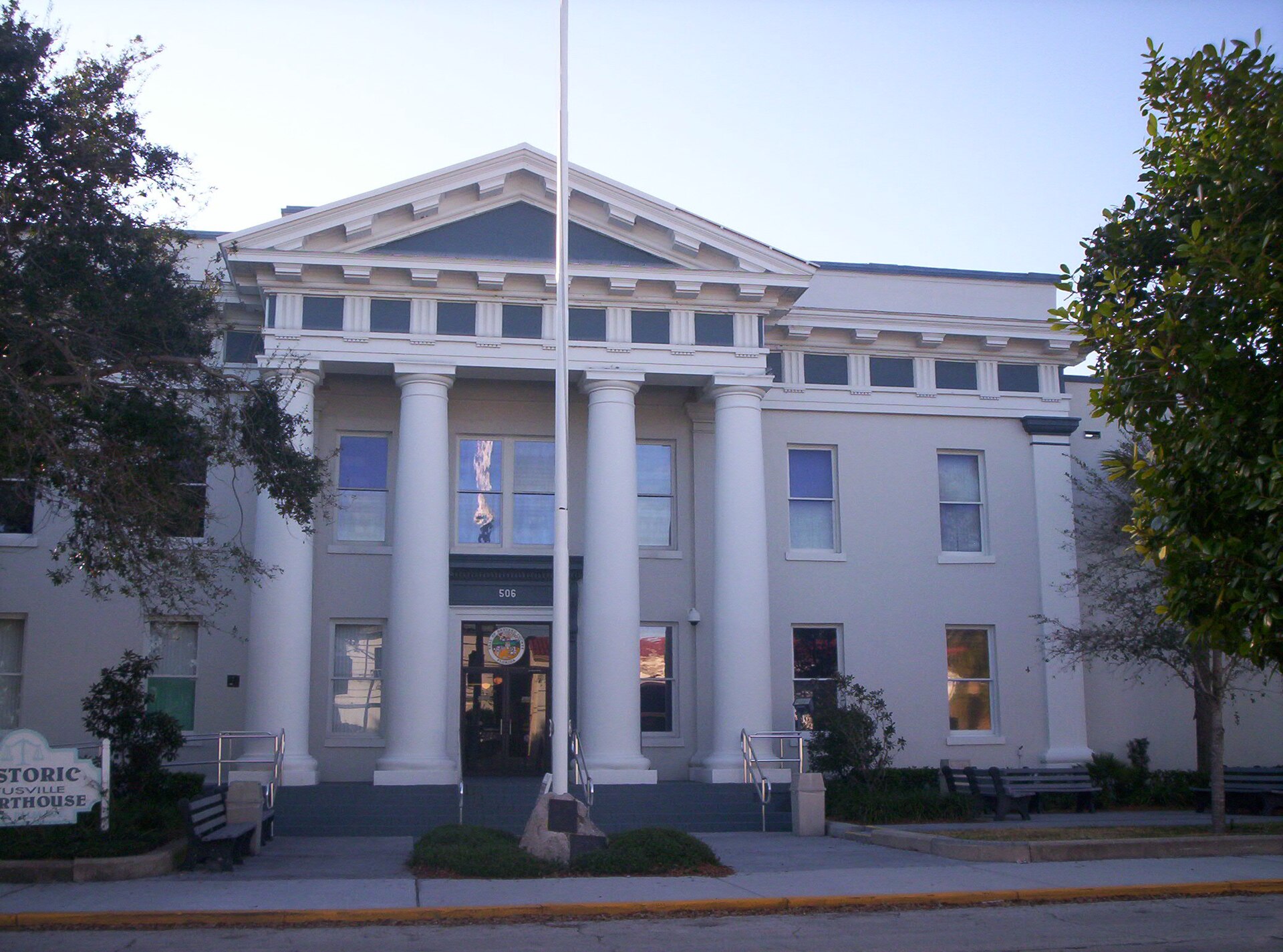
There have been three Brevard County courthouses in Titusville. The first was a small wood-frame building completed in 1882, shortly after the county seat moved from Lake Harney. It burned in 1894, taking most of the county’s pre-1894 records with it. The second, a brick building completed in 1912, still stands at the corner of Palm Avenue and Main Street; it served as the active courthouse until 1994 and is now the Vassar B. Carlton Historic Titusville Courthouse, used for ceremonial and limited judicial functions. The third, the Moore Justice Center complex completed in 1994 and named after Harry T. Moore, is the active Brevard County government and judicial center.
The 1882 wood-frame courthouse
The county commission’s first task after the seat moved in 1880 was building a permanent courthouse. The structure that resulted was modest: two stories, wood frame, perhaps 4,000 square feet, completed at a cost recorded in the surviving 1880s ledgers at approximately $5,000. It housed the circuit-court courtroom on the second floor, the clerk’s office on the first floor, and the county jail in a separate small structure on the same lot.
What’s documented about this building comes mostly from period photograph attributions and from the surviving Brevard County financial records that were not lost in the 1894 fire. No reliable interior photographs survive.
The fire came in 1894. The cause was never fully established; the most-cited contemporary explanation was a heater or stove malfunction during cold weather. What’s certain is that the building burned to the ground and that the bulk of the county’s pre-1894 records went with it: deed records, marriage records, court files, tax rolls. The records loss is the reason most pre-1894 history of Brevard County has to be reconstructed from secondary sources (Florida Memory, federal census, surviving newspaper runs).
The 1894 fire is part of a pattern across late-19th-century Florida county-government records. Multiple Florida county courthouses burned during the same period; the wood-frame construction, the heating practices, and the absence of fireproof safes for records were the common factors.
The 1912 brick courthouse
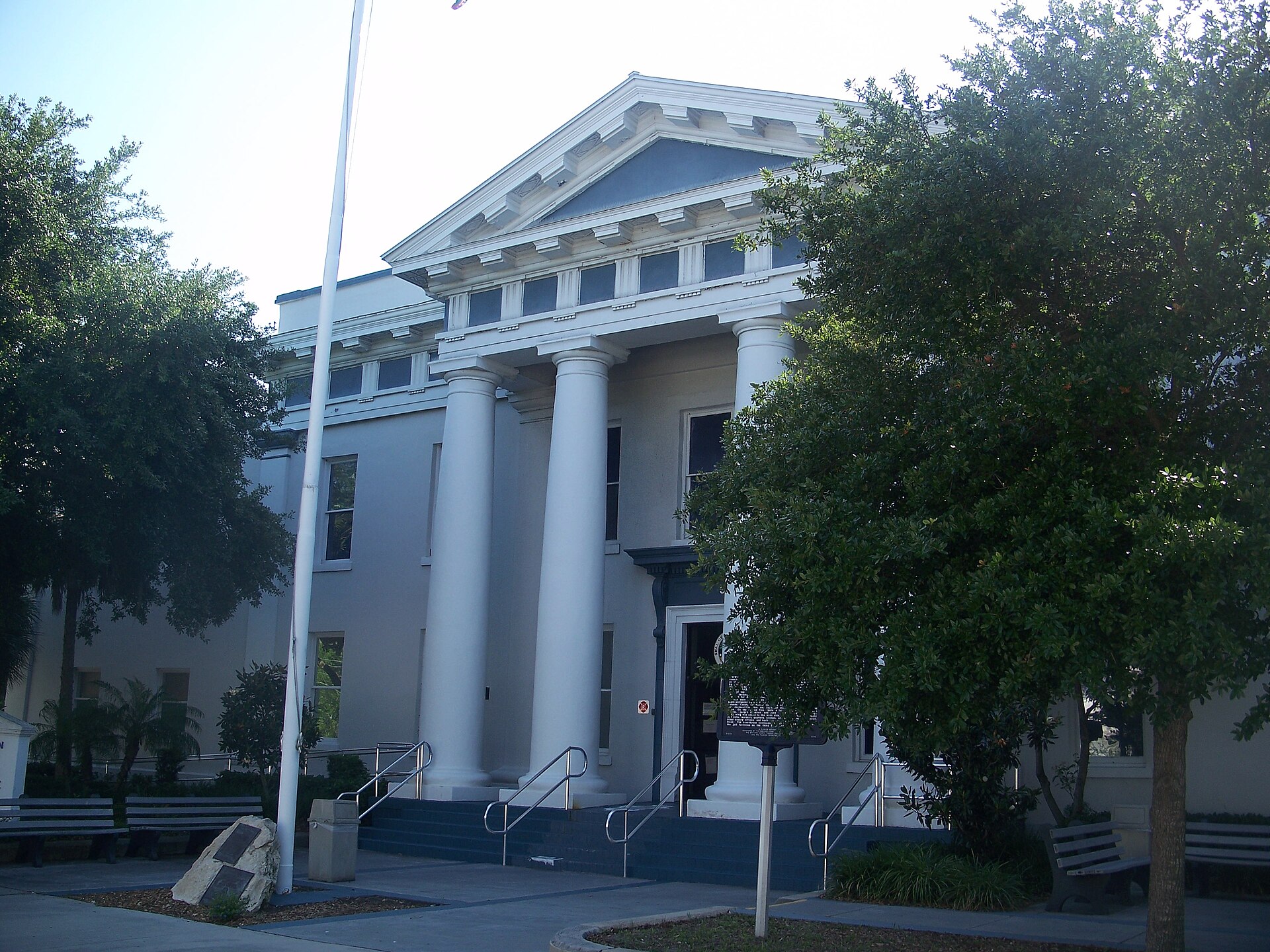
The county commission moved courthouse functions to temporary quarters after the 1894 fire and operated from rented space for over a decade. The replacement building, designed by Atlanta architect Frank P. Milburn in a Classical Revival style typical of Southern courthouses of the period, was completed in 1912 at a cost of approximately $35,000.
The building’s design is the standard early-20th-century Southern courthouse template: red brick exterior with limestone trim, raised first floor with a central pedimented entrance, two main floors with a small attic and basement, and a small cupola at the roof center. The plan is a Greek-cross arrangement with the main courtroom on the second floor occupying the east arm of the cross.
The building is listed on the National Register of Historic Places (added 1989). The NRHP nomination provides the most complete documentary history of the structure, including its construction documentation, alteration history, and architectural significance.
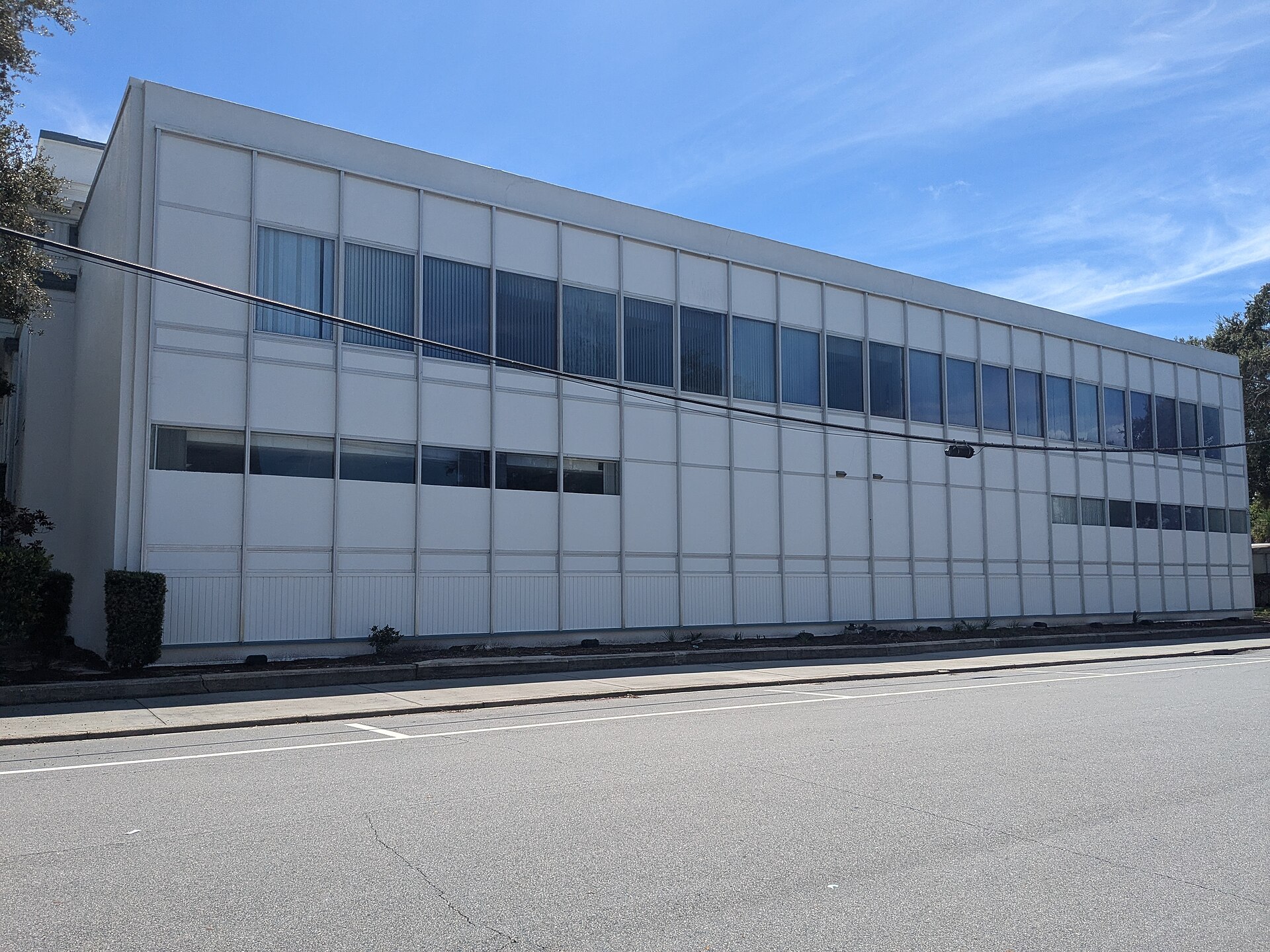
Through the 20th century the 1912 building served as the active courthouse. Several additions were built, most consequentially the mid-century expansion documented in the secondary photograph above. By the 1980s the building was inadequate for the population of Brevard County, which had grown from roughly 70,000 in 1960 (the pre-NASA Brevard) to nearly 400,000 by 1990 (post-NASA, post-suburban-expansion Brevard).
The Vassar B. Carlton Historic Titusville Courthouse
The historic name reflects the renaming after Vassar B. Carlton, a Brevard County circuit judge whose service in the 1912 building was significant enough to attach his name when the active functions moved to the new complex. The 1912 building was preserved, restored, and continues to host occasional ceremonial functions (weddings, judicial swearing-in ceremonies, public meetings).
The restoration program retained the building’s original interior architectural detail to the extent feasible: the second-floor courtroom’s bench, gallery, and wood paneling are substantially original, with appropriate modernization for ADA compliance and life-safety code requirements.
The 1994 Moore Justice Center
The active courthouse and county-administration complex is the Moore Justice Center, located a few blocks from the historic building on South Street. The complex was named for Harry T. Moore, the NAACP organizer assassinated in Mims in 1951 (covered in a separate article). The naming was significant: Brevard County in 1994 formally attached the name of the man it had failed to protect in 1951 to its principal civic building.
The complex houses the circuit court, county court, state attorney’s office, public defender, clerk of court, and several administrative offices. It is a modern facility built to mid-1990s standards and has been periodically renovated since.
Why three buildings on one lot
The Titusville civic core is small. The 1882 building, the 1912 building, and the 1994 complex are all within a few blocks of each other in downtown Titusville. The historical accident of putting the county seat at the bluff above the Indian River in 1880, and then never moving it, concentrated 140 years of civic infrastructure in a footprint of perhaps four city blocks.
The downtown street pattern around the courthouses still reflects this concentration. Palm Avenue, Main Street, Hopkins Avenue, Indian River Avenue, the older Titusville street grid runs in a tight loop around the civic core, with the older commercial buildings (Pritchard Brothers Bank, several early-20th-century retail blocks) facing the courthouse buildings across the small civic squares the 1882 and 1912 designs created.
The records situation
For genealogical and historical research, the pre-1894 records problem is severe. Most Brevard County records before the fire are simply gone. What survives comes from federal sources (census records, military service records, federal land patents), Florida state-level records held in Tallahassee, contemporary newspaper coverage where issues are extant, and surviving private correspondence and business records.
Post-1894 records are intact and held by the Brevard County Clerk of Court, the Brevard County Property Appraiser, and the Florida State Archives in Tallahassee for older transferred records. Deed records, marriage records, court files, and tax rolls from 1894 onward are continuous.
Frank P. Milburn, the courthouse architect
The 1912 courthouse’s architect, Frank Pierce Milburn, was one of the most prolific Southern public-building architects of the late 19th and early 20th centuries. Born in Bowling Green, Kentucky in 1868, Milburn practiced from Charlotte, North Carolina and Washington, D.C., designing courthouses, university buildings, hotels, and state capitols across the South. His firm completed more than 250 buildings between roughly 1890 and 1925, including multiple state capitols (Mississippi and South Carolina extensions, the West Virginia governor’s mansion), and dozens of county courthouses across North Carolina, South Carolina, Georgia, Alabama, and Florida.
Milburn’s Brevard courthouse fits the firm’s standard early-20th-century Classical Revival template: red brick exterior with limestone trim, raised first floor with a pedimented entrance, two main floors plus attic and basement, central cupola, Greek-cross plan with the main courtroom on the second floor. The same design language appears in Milburn courthouses in other Florida counties, including Putnam County’s 1909 building and Lake County’s similar early-20th-century structure. The repeated template was a feature, not a bug, of Milburn’s practice: a documented design that could be priced reliably, built by local contractors with regional materials, and produce a recognizable civic statement at small-county budget scale.
That a 1912 Brevard County government with a population of perhaps 5,000 could afford a Milburn-designed building reflects both Milburn’s deliberate small-budget specialization and the post-freeze recovery of the county’s tax base. The original $35,000 construction cost would translate to roughly $1.1 million in 2026 dollars, a serious investment for a county of that size but not an extraordinary one. The building’s century-plus of service is the practical return on that 1912 investment.
What the courthouses mean
A small Florida town’s identity is concentrated in its courthouse. The wood-frame 1882 building established Titusville’s institutional status. The 1912 brick building gave the town a civic monument that survived the 20th century. The 1994 complex named after Moore put a deliberate civil-rights anchor at the center of a county that had failed to deliver justice in his case for 55 years.
Together they trace Titusville’s institutional history from frontier settlement through Jim Crow Florida through the modern post-civil-rights county that now governs nearly 600,000 residents. The buildings are not architecturally extraordinary. Their meaning is in continuity: 144 years of county government in essentially one location, with the documentary record (post-1894) to back it up.
Further Reading
As an Amazon Associate we earn from qualifying purchases.